



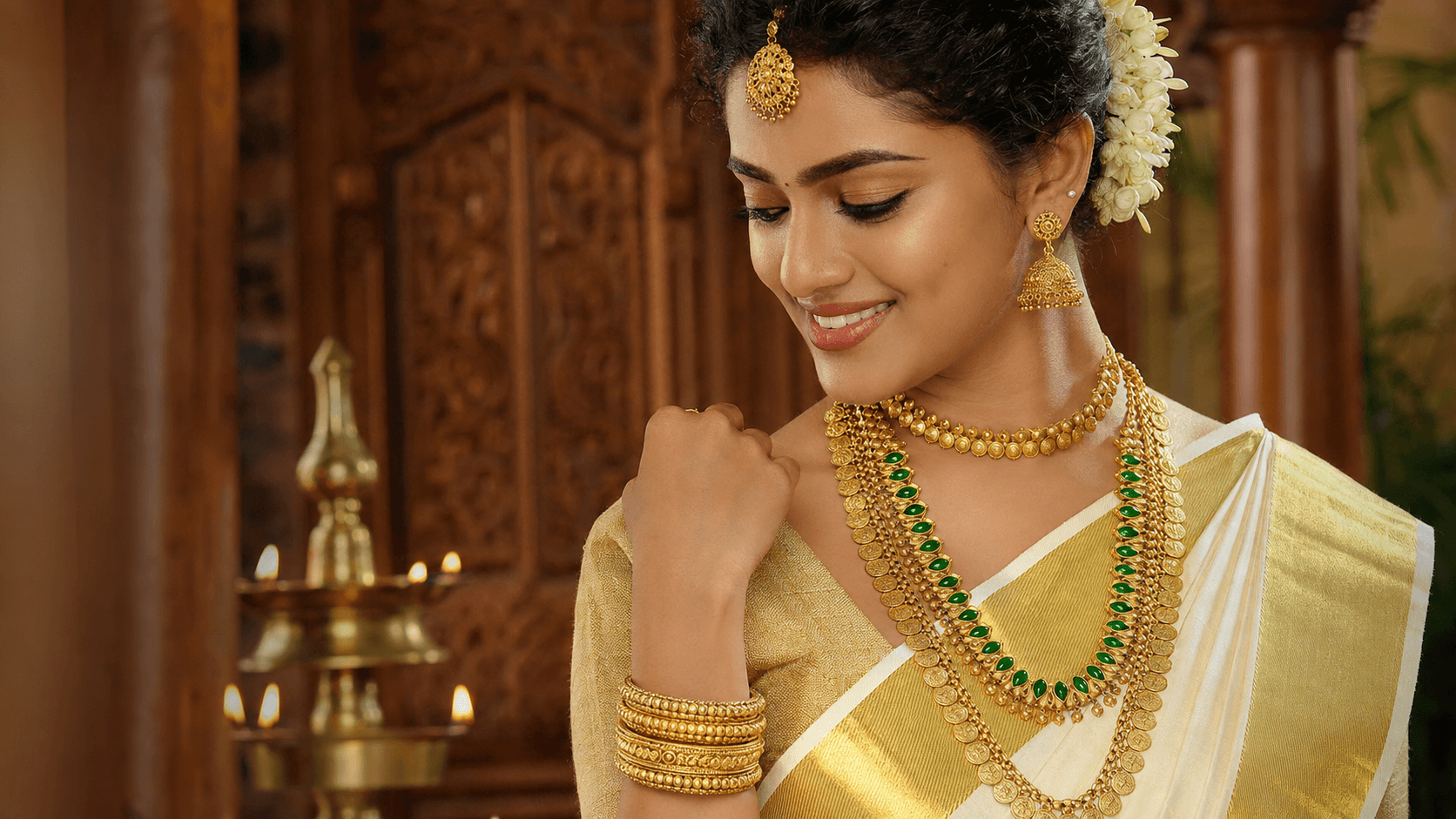
Kerala’s bridal and festive scenes shine with a breathtaking display of gold, signaling both family wealth and deep-rooted ancestry. This detailed guide traces the historical origins, design elements, and cultural meanings of these ornaments. Readers will gain a clear view of the artistry behind Traditional Jewellery Styles of Kerala, helping them recognize authentic pieces.
Gold holds a singular place in the trade history of southwestern India. Ancient commerce with Rome, Greece, and the Middle East brought a steady flow of precious metal, which local goldsmiths shaped into complex designs. Over generations, these creators developed classic regional ornaments, drawing ideas from local flora and temple architecture.
Many patterns mirror the plants and wildlife of the Western Ghats, including jasmine buds, mangoes, and serpent heads. This link to nature means every ornament carries a specific local story. Royal courts in Travancore and Cochin nurtured these methods, securing their place in local life.
Key Aspects of Kerala’s Golden Artistry
Authentic ornaments rely on high-purity gold and colorful gemstones rather than heavy enamel. The main motifs focus on the raw shine of the metal, using shapes that represent local temple deities and sacred patterns. These classic forms define the core of Traditional Jewellery Styles of Kerala.
Goldsmiths use specialized hand methods like die-stamping, fine wire filigree, and gold beadwork to build texture. The design balances broad proportions with small, repeating details. This balance keeps even the largest necklaces light and easy to wear during long marriage ceremonies.
Iconic Necklaces of Southwestern India
The Palakka Mala is among the most famous examples of Traditional Jewellery Styles of Kerala. It features leaf-shaped green glass pieces that look like the foliage of the Pala tree, edged with tiny gold beads. This green necklace matches the lush landscapes of the region and brings good fortune to a new bride.
The region boasts a wide variety of these symbolic necklaces. Each piece has a specific ceremonial role and design philosophy. The table below outlines the most classic creations.
| Ornament Name | Primary Motif | Symbolic Meaning |
|---|---|---|
| Manga Mala | Mango-shaped pendants | Fertility and prosperity |
| Nagapada Thali | Cobra hood replication | Protection and serpent worship |
| Kashu Mala | Gold coins with Lakshmi motifs | Wealth and divine blessings |
| Mulla Motu Mala | Jasmine buds | Purity and organic beauty |
Artisans carve each of these elements, making sure every pendant matches the next. The repetition of these shapes creates a rhythmic visual flow that marks the classic designs. This repetition is a key feature of the Traditional Jewellery Styles of Kerala.
Unique Body and Ear Ornaments
Traditional Jewellery Styles of Kerala reach beyond necklaces to include ornaments for the ears, wrists, and waist. The Jhimki is a bell-shaped earring featuring light gold wirework and hanging beads. These earrings sway gently with every step, making a faint, pleasant sound.
Other body ornaments also play an important role in the classic clothing of the region. These pieces complete the bridal look and carry deep cultural significance.
- Aranjanam: A thin gold chain worn around the waist to ward off evil spirits.
- Elakkathali: A highly polished choker made of interlocking gold plates that shimmer with movement.
- Kumbha Thali: A heavy pendant necklace traditionally worn by brides from specific communities.
The Elakkathali requires incredible skill to ensure the plates catch the light in a uniform way. This piece remains one of the hardest ornaments to shape by hand. It stands as a prime example of the Traditional Jewellery Styles of Kerala.
Modern Adaptations and Preservation of the Craft
Modern jewelers are adapting these classic shapes to suit modern tastes without losing their cultural soul. Lighter versions of these designs are popular with younger people who prefer quiet elegance over heavy ornaments. These newer styles pair easily with casual wear or western clothing.
Goldsmiths in areas like Thrissur, the gold hub of Kerala, still use old hand-crafting methods. These workers preserve the authentic feel and weight that machine copies cannot match. Buyers should look for proper purity marks and check the hand-carved details when looking for these pieces.
Authentic Traditional Jewellery Styles of Kerala show a warm, reddish gold tone because of the specific copper mix used by local smiths. This unique color is a sign of authenticity that collectors seek out. Keeping these handcraft methods alive is vital for the survival of local craft communities.
Preserving the Golden Heritage
This look at local gold craft reveals a deep bond between hand labor, nature, and belief. The Traditional Jewellery Styles of Kerala remain a central part of local identity and modern celebration fashion.
Key lessons from this design guide:
- Authentic designs draw heavily from local nature, including mangoes, jasmine buds, and cobra hoods.
- Classic ornaments like the Palakka Mala and Kashu Mala carry deep symbolic meanings related to fertility, wealth, and spiritual protection.
- Thrissur remains the primary hub for authentic, hand-crafted gold ornaments.
- Modern lightweight adaptations allow these historic designs to fit into contemporary daily wear.
Keeping these artistic skills alive ensures that future generations can enjoy the rich material culture of southwestern India. The lasting appeal of these designs shows their timeless beauty and craftsmanship.




Comments are closed