



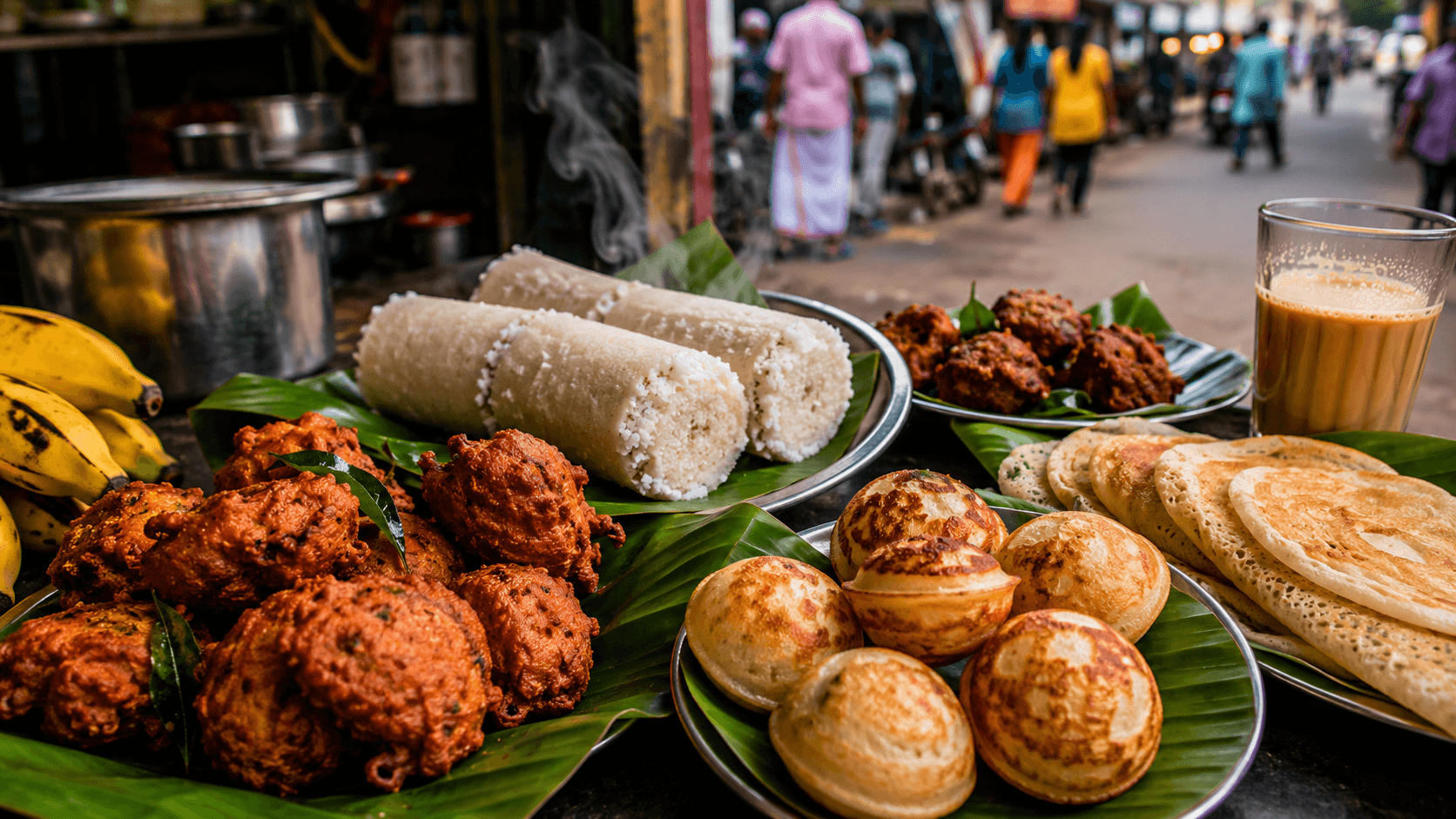
The History of Local Culinary Traditions
The coastal strip of Kerala has a food scene shaped by centuries of trade with Arab, Portuguese, and Dutch sailors. This guide breaks down the most famous wayside plates, their histories, costs, and cooking methods. Travelers can use this information to navigate the busy local stalls with ease.
The regional kitchen relies on local farm harvests and ocean catches. Delving into the famous street foods of Kerala reveals a culinary legacy shaped by centuries of seafaring merchants.
Historical Roots of Coastal Flavors
Culinary practices in Southwest India grew through centuries of sea trade. Sailors brought cassava, red chilies, and deep-frying habits to the shores of the Malabar Coast.
The growth of these culinary styles explains why travelers seek out the famous street foods of Kerala to experience raw, intense heat. These ingredients merged with local coconut, rice, and native spices to form a unique street food culture.
Local black pepper and cardamom set these dishes apart from food in neighboring states. This blending ensures that every small roadside cart serves food with deep historical ties.
Iconic Plates and Cooking Methods
Wayside cooks keep their cooking routines strict to protect the classic tastes. The flaky Malabar Parotta, a layered flatbread made of white flour, demands intense kneading, stretching, and slapping of the dough.
Standing by a hot griddle and devouring the famous street foods of Kerala is a sensory rite of passage. Cooks roast the parotta on heavy iron plates until the layers turn crispy and brown.
- Black Pepper: Plucked from the Western Ghats to give a sharp, fiery kick to local gravies.
- Cardamom: Gathered from nearby hills to introduce a sweet, woodsy fragrance to hot tea.
- Fennel Seeds: Used in meat rubs and dough mixes to provide a warm, anise-like undertone.
Kappa Biryani is another heavy staple, mixing boiled cassava root with spiced beef curry. This hearty combination stands out among the famous street foods of Kerala for its sheer simplicity and heavy spice blend.
It started as a cheap, high-energy dish for manual laborers in the mid-1900s. Slow-cooked beef juices soak into the starchy cassava, making it rich and filling.
Finding Fresh Local Ingredients
Street cooking depends on using daily regional harvests. Seaside vendors buy their fish straight from the boats at busy piers like the one in Fort Kochi.
Using local cold-pressed coconut oil defines the preparation of many famous street foods of Kerala. This oil handles high heat well and adds a distinct nuttiness that standard vegetable oils cannot match.
- Chalai Bazaar in Thiruvananthapuram: A crowded market supplying fresh spices, local greens, and green banana leaves.
- Kozhikode Valiyangadi: A very old trading street where vendors buy bulk flour, rice, and dried red chilies.
- Munambam Harbor: The main dock for getting fresh sardines and prawns to fry at evening stalls.
Sweet Bites of the Malabar Coast
Sweet snacks draw large crowds to the evening stalls. Pazham Pori, or fried banana fritters, are made by dipping ripe local Ethapazham bananas into a light, sweetened batter.
The fruit must be fully ripe, marked with dark spots, to ensure a soft and sweet center after frying. Stall owners serve these hot fritters with strong black tea in the late afternoon.
Locals routinely recommend these sweet fritters when discussing the famous street foods of Kerala. The balance of sugary bananas and spicy curries shows how well local cooks mix contrasting flavors.
Average Prices for Wayside Dishes
The cost of enjoying the famous street foods of Kerala remains remarkably affordable. Most items are priced to feed working-class locals and budget travelers alike.
| Dish Name | Price Range (INR) | Portion / Type |
|---|---|---|
| Malabar Parotta with Beef Curry | 80 – 120 | Serves one adult |
| Pazham Pori | 10 – 15 | Per piece (quick snack) |
| Kappa Biryani | 90 – 150 | Heavy main-course meal |
Practical Tips for Food Lovers
Exploring the roadside stalls requires knowing their hours and basic habits. Most small carts, called Thattukadas, start frying around four in the afternoon and close down around midnight.
Local clean-food rules have made these stalls much safer. Look for carts with fast-moving lines, since high food turnover ensures that your meal is hot and freshly made.
Water at these places is usually boiled with cumin or sappanwood. This traditional trick helps digestion and keeps the water clean.
Concluding Thoughts
Exploring the famous street foods of Kerala offers a direct route to understanding this coastal region. The mix of old shipping history, fresh spices, and direct cooking makes every plate memorable.
Visitors get a real taste of local life by visiting high-turnover carts. Trying local staples like flaky parotta or banana fritters reveals the true spirit of this coastal state.





Comments are closed