



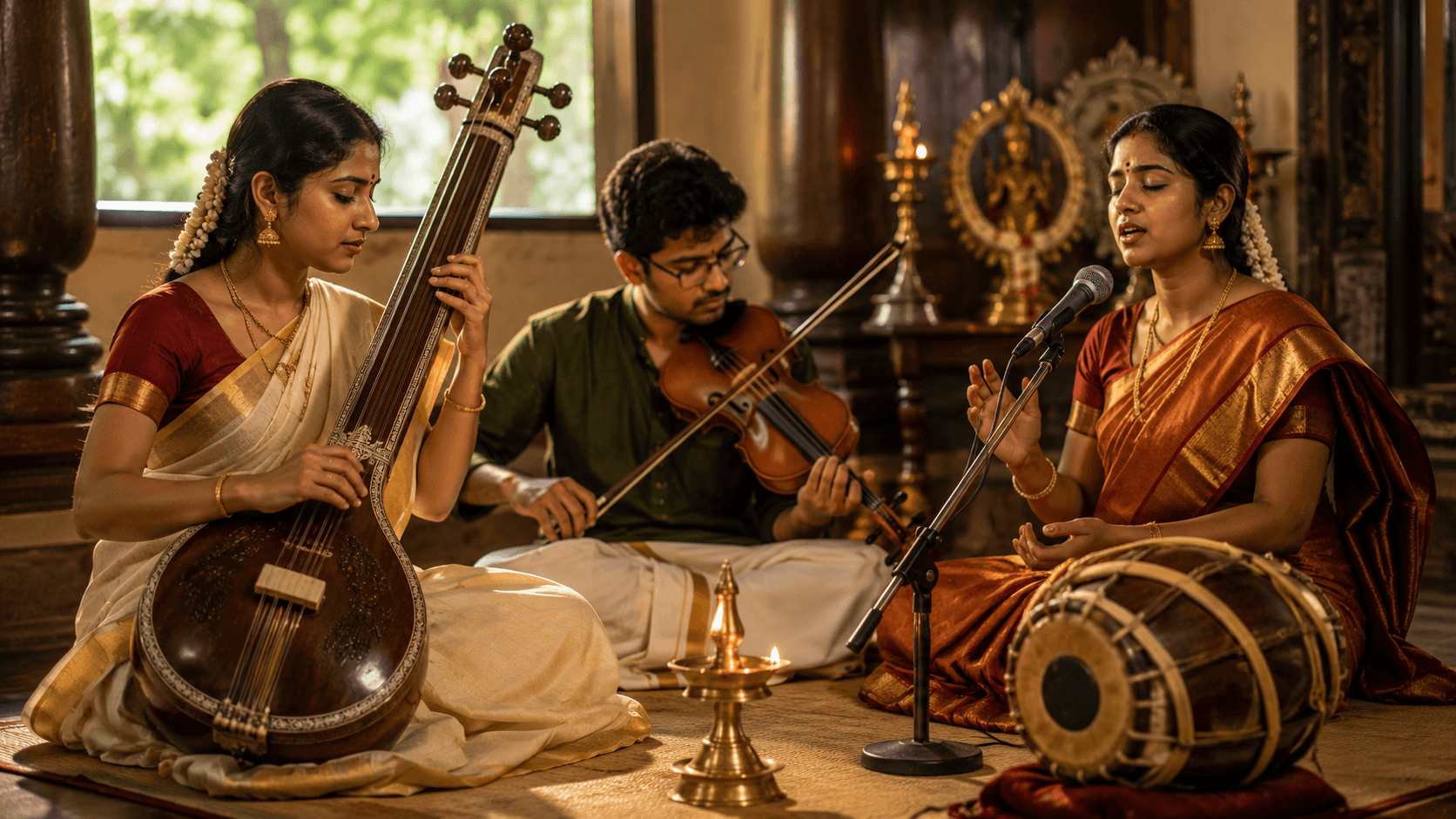
Kerala holds a deep, ancient bond with classical music. While South India as a whole cherishes the Carnatic style, Kerala injects its own regional flavor into the performance. This resource acts as A Beginner’s Guide to Carnatic Music in Kerala, pointing you toward the royal patrons, structures, and celebrations that shape this local sound.
Grasping this system means looking at how local temple traditions meet classical grammar. The state managed to keep its old shrine singing styles alive while adopting strict Carnatic norms. This text breaks down the basic building blocks to help you enjoy this art.
Historical Roots of the Music
The golden age of local classical sounds blossomed under the Travancore royal family during the nineteenth century. Maharaja Swathi Thirunal Rama Varma, ruling from 1829 to 1846, remains a giant in this artistic lineage. He composed music in several tongues, including Sanskrit, Malayalam, Telugu, Kannada, and Hindustani.
Getting to know this royal past is vital. For anyone starting this path, A Beginner’s Guide to Carnatic Music in Kerala points to the Travancore court as the main driver of these classical arts. The king invited legendary singers from all corners of India, turning his court into a busy center of creative sharing.
This mixture of styles lifted local standards to match the famous traditions of Tanjore. As noted in A Beginner’s Guide to Carnatic Music in Kerala, this cross-pollination enriched the regional style immensely.
During this same period, legends like Shadkala Govinda Marar changed how people sang. Marar was famous for singing at six different speeds, a skill that earned praise from his peer, Saint Tyagaraja. This tradition of speed and precision still defines local vocal training today.
The Union of Sopana Sangeetham and Classical Styles
Before adopting standard Carnatic formats, the region had its own native classical style called Sopana Sangeetham. Singers perform this form on the stone steps leading to temple inner shrines. It uses a slow, grand pace and values emotional worship over complex mathematical note patterns.
In any study of local arts, this blend of styles serves as a main focus in A Beginner’s Guide to Carnatic Music in Kerala. Modern concerts here still carry traces of that older temple style, showing up as highly emotional singing. This structural mix offers a deeply moving sound that you will not easily find elsewhere.
To see how Sopana Sangeetham works with classical singing, look at these basic elements.
- The singing style connects directly to the beats of the holy Idakka drum.
- Musicians sing specific ragas like Bhupalam to set a ritual mood.
- The style values the emotional weight of the words over fast vocal tricks.
Basic Building Blocks for New Listeners
Every classical music system rests on base pillars that control melody and rhythm. In this southern system, these parts are Sruti, Raga, and Tala. Knowing these three elements changes how you listen, turning basic sound into deep understanding.
Old temples in Thiruvananthapuram offer a great starting point for your musical journey. As part of A Beginner’s Guide to Carnatic Music in Kerala, we suggest visiting these old temples to hear the music live. By tuning your ears to the drone of the stringed tanpura, you can spot the central pitch that holds the show together.
This simple tone guarantees that all following melody changes stay in perfect harmony.
| Component | Description | Role in Performance |
|---|---|---|
| Sruti | The basic pitch or drone | Anchors the music and keeps notes in tune |
| Raga | The melodic scale and notes | Sets the mood and defines the rules of play |
| Tala | The repeating rhythm or beat cycle | Keeps the timing and speed steady |
Great Composers and Legends of the Region
The local songbook is incredibly rich, thanks to past and present music makers. These writers did more than scribble songs; they built complex stories reflecting the faith and society of their times. Studying their work gives any newcomer a wonderful starting place.
Teachers often suggest learning basic songs called varnams first. Grasping these simple pieces is a vital step, which is why A Beginner’s Guide to Carnatic Music in Kerala focuses on these basic training tracks. Learning these composers by name helps you pick concerts and records of the highest quality.
Musicians still play their songs in big concert halls around the world today.
Here are some of the composers whose work keeps defining the local style:
- Swathi Thirunal Rama Varma wrote famous pieces like Deva Deva Kalayami to praise the deity Padmanabha.
- Irayimman Thampi penned the celebrated lullaby Omanathinkal Kidavo along with many classical dance songs.
- Kutty Kunju Thankachi, daughter of Irayimman Thampi, rose to fame as a rare female composer in the 1800s.
Big Classical Festivals in the State
Hearing this music live brings a special kind of energy and depth. The state hosts several famous yearly music festivals that draw top singers and players from all over the country. These events are open to everyone and offer a warm space for beginners.
To get the most out of the yearly Swathi Sangeethotsavam festival, A Beginner’s Guide to Carnatic Music in Kerala offers some background on the king’s music. This festival happens at the old Kuthira Malika Palace in Thiruvananthapuram every January. The open courtyard, lit by clay oil lamps, makes for a memorable night of acoustic music.
Another massive event is the Chembai Sangeethotsavam, held at the Guruvayur Temple late in the year. This gathering honors the memory of singer Chembai Vaidyanatha Bhagavathar. Thousands of musicians come together to sing classical hymns and Chembai’s favorite compositions in unison, creating a powerful feeling of shared harmony.
Useful Concert Manners for Beginners
Going to your first concert can feel intimidating if you do not know what to expect. Start by watching how the main singer talks to the other musicians on stage. Usually, a violin player copies the singer’s lines, while a mridangam drum player keeps the steady beat.
Keeping these simple tips in mind helps you move easily from casual listener to true fan. Watch the hands of the people around you, as they keep the beat by clapping and waving in time with the music. Joining in this quiet action links you straight to the heart of the show.
It is also helpful to hear recordings of simple ragas like Mayamalavagowla before you go. Spotting these scales helps you enjoy the wild, off-the-cuff ideas the musicians play on stage. This bit of homework builds great confidence in your ears over time.
Final Thoughts
The classical music world of Kerala is a beautiful sign of how people protect old ways while chasing great art. From the high rooms of the Travancore palace to the steps of village temples, this style keeps inspiring new generations of fans. Musicians and listeners alike find something deep here.
By using the simple ideas in A Beginner’s Guide to Carnatic Music in Kerala, you can change how you hear these sounds. Focus on basic ideas like Sruti and Raga, seek out the songs of Swathi Thirunal, and visit live festivals to soak in the scene. This mindful journey reveals the deep spiritual and artistic wealth of the state’s musical past.





Comments are closed