



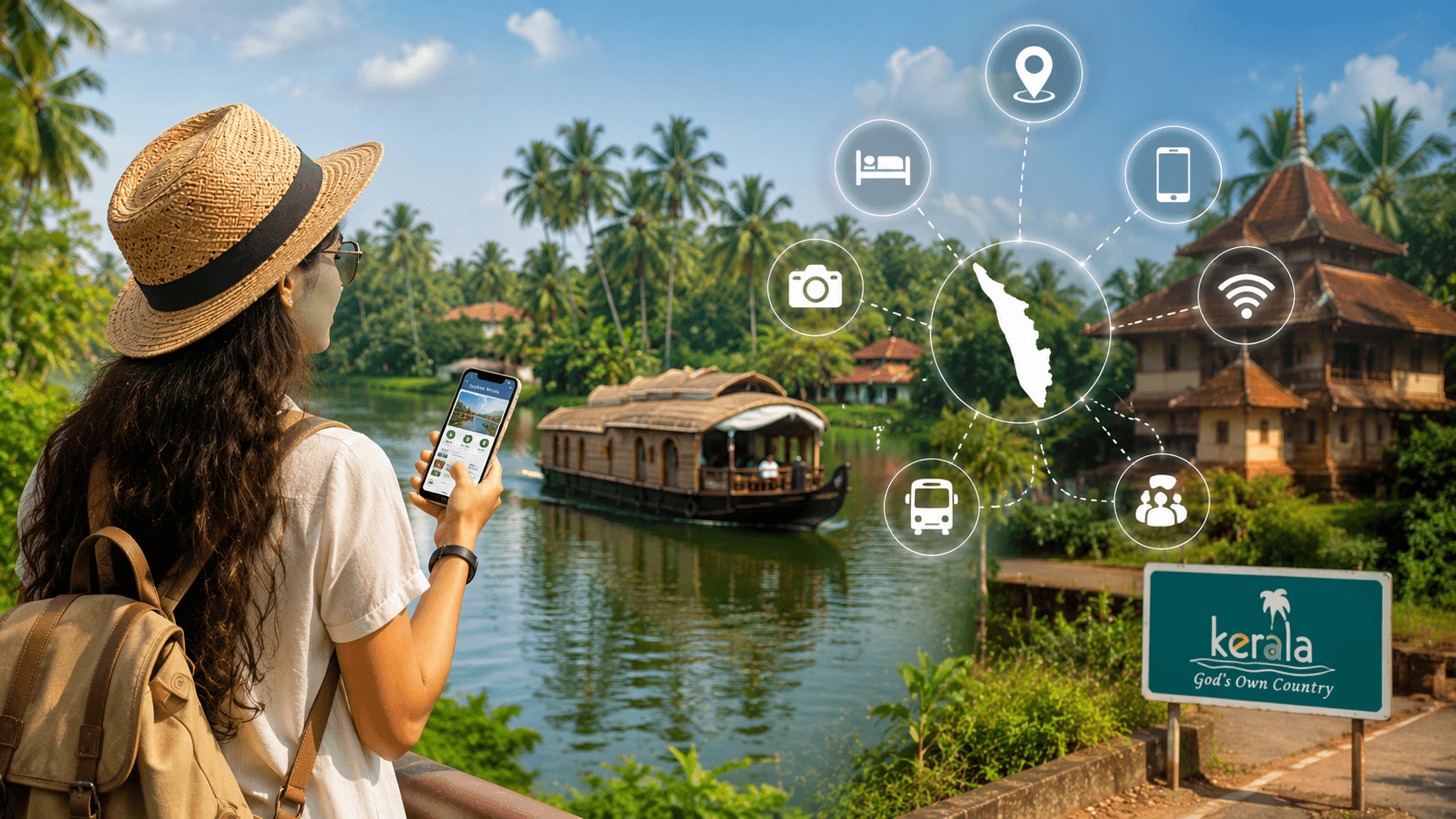
The Digital Revolution in the Backwaters
Kerala is undergoing a massive digital shift in its travel sector. This change alters how millions of global visitors experience the quiet backwaters, sunny beaches, and misty hill stations of the southern state. Our detailed breakdown looks at the software, contactless portals, and smart management tools driving this change.
Exploring the state’s modern tourism landscape reveals exactly How Technology Is Transforming Tourism in Kerala by streamlining bookings and preserving cultural heritage.
Smart Hospitality and Contactless Travel
Hotels and hosts across the region now use linked property management software to make guest visits smoother. Travelers check into historic homestays using automated mobile keys, which cuts down wait times and removes paper forms. This simple shift keeps things fast and easy.
This operational shift illustrates How Technology Is Transforming Tourism in Kerala by offering seamless arrivals even in remote plantation bungalows. Digital payment systems have also spread to the most distant corners of the state.
We can see How Technology Is Transforming Tourism in Kerala through the widespread adoption of digital payment systems in rural areas. Visitors pay for classic houseboat cruises or local spice purchases with secure mobile wallets and quick-response codes. This cashless setup helps local shops by removing payment hurdles for everyone.
Key Digital Tools in Action
Several software options now simplify travel and boost connectivity across the region. These systems make it easier to plan trips on the go.
| Initiative Name | Technology Employed | Primary Impact |
|---|---|---|
| Maya AI Chatbot | WhatsApp Chatbot | Provides travelers with instant information on destinations, experiences, and updates. |
| Virtual Reality Kiosks | VR Technology | Allows travelers to preview destination highlights at major airports. |
| E-vessel Tracking | GPS Telemetry | Ensures passenger safety and monitors environmental impact on backwaters. |
Environmental Conservation and Smart Destination Management
The state government has set up Internet of Things sensors across fragile eco-zones to watch environmental health in real time. These devices track air quality and visitor numbers in areas like the Munnar tea gardens and Periyar Tiger Reserve. This helps keep these beautiful regions safe from overcrowding.
This setup shows How Technology Is Transforming Tourism in Kerala by providing useful data to prevent the ecological degradation of fragile wilderness areas. Crowd control systems now use smart algorithms to manage foot traffic at busy monuments.
When visitor numbers peak at Fort Kochi, digital screens guide incoming travelers to other nearby sights. This smart distribution of crowds protects old structures and keeps the journey pleasant. It ensures that popular spots do not suffer from too much wear and tear.
- Smart waste bins: Automated alerts tell cleanup crews exactly when public trash bins are full.
- Water quality sensors: Digital monitors watch the chemical levels in Vembanad Lake to shield local fish and plant life.
- Solar grid integration: Major resorts in Munnar use automated energy management systems to shrink their carbon footprint.
Preserving Heritage through Modern Digital Archiving
Preserving ancient art forms has found a strong partner in modern digital archiving tools. High-definition recording projects capture long performances of Kathakali and Koodiyattam to share them with the world online. This keeps these fragile traditions alive for everyone.
This intersection of tradition and innovation shows How Technology Is Transforming Tourism in Kerala by safeguarding cultural assets for future generations. Augmented reality apps now offer self-guided tours through old palaces and museum grounds.
Guests point their phones at specific items to view historical recreations and hear stories in multiple languages. This interactive storytelling brings history to life without messy signs that might ruin the look of old buildings.
State-Backed Initiatives and Travel-Tech Startups
The state funds incubator setups for local travel-tech firms to build custom answers to regional needs. These startups are proving How Technology Is Transforming Tourism in Kerala by designing hyper-local dining guides and AR-assisted walking tours.
Visitors now use interactive digital maps that highlight lesser-known spots in northern Malabar. This geographic spread helps share travel revenue with rural villages that used to miss out on the mainstream tourist rush.
Local guides use web platforms to sell their unique farm-to-table dining experiences directly to international guests. This new stream of income boosts rural families and builds resilient micro-economies across the region.
- Enhanced safety: SOS mobile features connect solo travelers instantly to nearby tourist police stations.
- Economic inclusion: Digital payment gateways let small roadside shops accept international card payments securely.
- Cultural preservation: Online databases keep traditional arts like Kathakali safe through high-definition video files.
Future Outlook of Digital Travel in the Region
Upcoming network upgrades will soon bring high-speed 5G connectivity to major travel routes. This cellular expansion will support remote workers and digital nomads who want to work from quiet beach towns. It makes mixing work and travel much simpler.
As we look ahead, the linking of smart transit networks demonstrates How Technology Is Transforming Tourism in Kerala by promoting green, low-impact travel options. Smart transit setups will also connect electric vehicle charging stations with real-time tracking apps.
Visitors will rent electric cars or scooters easily and map their routes based on live charging spots. This shift to electric transport matches the region’s long-term promise to keep travel eco-friendly and gentle on nature.
Conclusion
The shift toward a closely linked network shows exactly How Technology Is Transforming Tourism in Kerala for both modern visitors and local hosts. Adopting these new tools ensures the region stays competitive, eco-friendly, and open to guests from around the globe.
Moving from old travel habits to smart, data-driven visits guarantees the region’s scenic wonders stay protected. At the same time, it delivers top-tier convenience to every single traveler who arrives.





Comments are closed